Tops Day Nurseries is a group of 34 day nurseries across the South coast of England, providing early education and care for children of pre-school age. Tops started in 1990 and has grown organically using reinvestment, bank finance, lottery funding and local authority grants, and continues to grow and also to offer some out of school care to older children as well. Tops’ sister company, Shoots, emerged originally to train Tops’ own staff, achieving its own contract with the government to do so, and soon began delivering training to other local early years providers also. Feedback from other employers led to rebrands and new names, originally Aspire Training Team and Shoots as of 2025 to provide an identity less tied to Tops and more modern. Approximately 60% of Aspire Training team’s learners (apprentices and learners from level 1 to level 5 in early years, administration and leadership) are external to Tops, demonstrating a collaborative, partnership style of working.
The organisation investigated accreditations relevant to sustainability, and as a result, all nurseries and the office achieved championship status in SAS’s “Plastic Free Day nurseries”, (first in the country) in 2019; all nurseries became Green Flag “Eco-Schools” (first in the country) and the company was certified as a B.Corp in December 2020, changing its articles and memorandum to include its commitment to sustainability. The Queens Award was achieved in 2022. And in 2025 Tops Day Nurseries Shoots are scored 141 from B. Corp. amongst the best scores in the country.
The organisation become net carbon neutral for Scope 1 and Scope 2 in 2023 and continues to work on Scope 3 and on becoming net positive.
Different parts of the organisation focus on different interventions as appropriate to their department, for example, finance work on achieving utilities contracts with providers of renewable energy, allocating funding to sustainable investments, and intervening with electric vehicle provision for those claiming expenses from the company and they also measure the impact of sustainable actions (KPIs) and feeds back to the rest of the company.
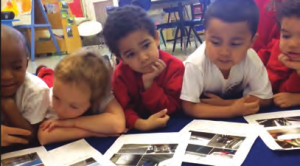
The nursery staff work on education for sustainable citizenship, developing pedagogy to teach children sustainability such as upcycling others waste, reducing their own waste, recycling, growing plants inside and outside, learning empathy and respect towards all living animals and fellow humans.
The catering department deliver an increasingly plant based, locally sourced menu and avoid clingfilm and similar, lunches are delivered to nurseries in EVs; those involved in purchasing require manufacturers and distributors to have an CSER policy and to be working towards increasingly sustainable products, circular economy products and being carbon neutral.
The People department provide metal sporks, lunch bags and metal water bottles, access to bike loans and finance and a sustainable travel policy and sustainability information in a variety of media such as facebook, emails, and awards, and arranges CPD to encourage colleagues to make sustainable choices
Different parts of the organisation focus on different interventions as appropriate to their department. Projects can be generated from the bottom up – such as a child’s interest in recycling, or turtles being entangled in plastic in a story book; or interventions can be generated from the top down, such as the accounts department changing electricity supplier from a fossil fuel supplier to a green energy supplier, or generating actions for the facilities department such as directing funding to instal solar panels, passive infra red switches, insulation or electric vehicles for those generating higher diesel or petrol expenses claims.
The nursery management or maintenance team generate actions in individual nurseries as appropriate, such as additional window film, insulation, window replacement, and ensuring heating/lighting is turned off when not needed by using close down check lists.
The Directors and marketing department lead communications and sharing best practice and also role model sustainable living to colleagues, parents and children, also providing information for registered charity GECCO to share with other nurseries.
The Sustainability group inspires, monitors and coordinates. and feeds back successes and calls for action as appropriate (see action plan and quarterly news, also good practice page on fb for staff)
The Hub support team provide metal sporks, lunch bags and metal water bottles, access to bike loans and finance and a sustainable travel policy and sustainability information in an accessible way.
A current focus is to reduce the use of plastic one-use nappies in day nurseries in order to benefit children’s development, reduce waste, and save money for parents and the nurseries. This is being achieved by providing and laundering washable nappies and reducing the age of toilet training success by using toilet education from the start.